ARTICLE Identity, Artistry, and Wellness in Expanding the Canon
By Rebecca Starkman, PhD
Introduction
In moments when questions of identity, belonging, and inclusion are most pressing, the arts can serve as both mirror and catalyst. Jewish artists and artistic communities play a central role in helping to reflect back to the broader Jewish world ways of processing this complex moment we are in and also provide generative spaces in which to explore pathways for growth and change. The Jewish arts reflect the multiplicity of Jewish experience while also generating new possibilities for recognition, dialogue, and shared future. The theme of wellbeing is especially fitting in this context. When Jewish artists are able to see themselves fully represented, their sense of wholeness deepens and their creativity flourishes. Conversely, when voices are marginalized or silenced, the wellbeing of both individuals and communities can be diminished.
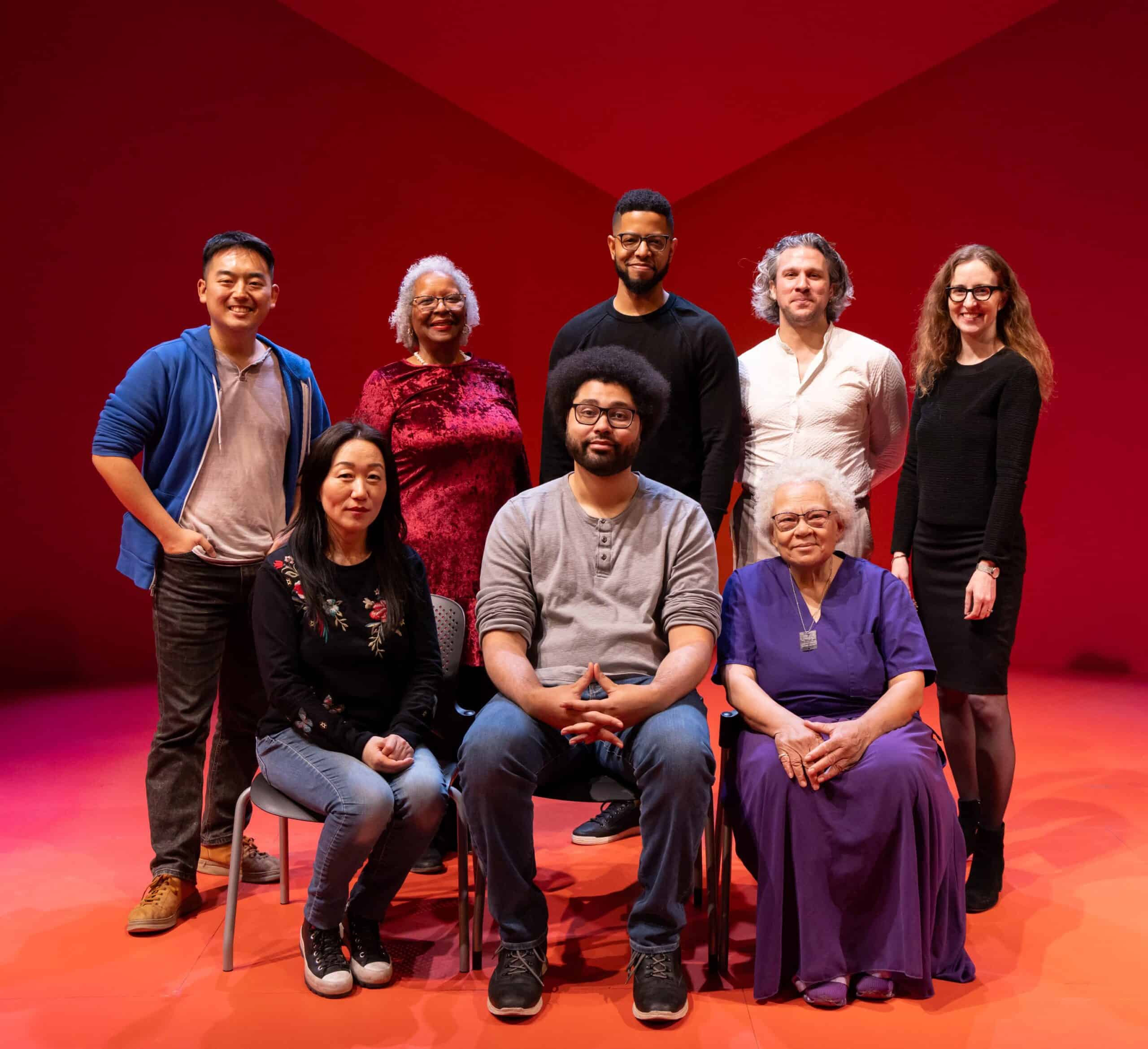
“Expanding the Canon (ETC),” an innovative playwrights’ commission hosted by Theatre J in Washington, D.C., demonstrates the profound link between representation, artistry, and wellbeing. The American Jewish theatrical landscape has historically centered Ashkenazi and white narratives. Through commissioning seven racially and ethnically diverse, and non-Ashkenazi, Jewish playwrights, ETC sought to expand the range of stories and representations within the Jewish theatrical canon. This article examines how ETC fostered wellbeing at both individual and community levels, drawing on data from an evaluation supported by a Covenant Foundation Signature Grant. The experiences shared by the participating playwrights reveal how identity recognition, creative validation, and community connection can advance wellness at multiple levels. The key takeaways also point toward lessons for other Jewish cultural and educational organizations seeking to enable diverse constituencies to flourish.
Overview of Expanding the Canon
Expanding the Canon was unprecedented in scope and vision. Spearheaded by Theatre J, America’s leading Jewish theatre and supported by a Covenant Foundation Signature Grant, it was the first program of its kind to intentionally commission Jewish playwrights of color and those from underrepresented ethnocultural Jewish backgrounds to create new plays. The two-year initiative was structured around several core components: facilitated Jewish learning experiences that deepened textual and cultural engagement (including an immersive opening retreat and ongoing lectures); a writers’ group that met regularly (virtually) to build community and share draft scripts; financial support for research and development for each playwright’s script; and a culminating capstone event to showcase the works in progress. This structure combined high-calibre professional artistic development with Jewish cultural and communal enrichment. Playwrights were given not only financial and institutional support but also a supportive space in which to explore their multifaceted Jewish identities. In the process, ETC challenged long-standing assumptions about whose stories “count” in Jewish theatre and offered a model for how arts institutions can center marginalized voices while maintaining rigorous artistic standards.
The Covenant Foundation’s Signature Grant enabled a two-year evaluation of ETC. Data collection included annual interviews with Theatre J staff, focus groups and observations of monthly writers’ group meetings, and individual interviews with each playwright. The research captured both participants’ immediate experiences and the evolving significance of the commission over time. Data collected through the evaluation provide a unique lens on wellbeing. The interviews with each playwright reveal how the program shaped participants’ sense of identity, belonging, and creative legitimacy. They also illuminate the broader implications for Jewish communal wellbeing by highlighting the importance of representation, cultural diversity, and inclusion in Jewish arts spaces.
Conceptualizing Wellbeing
Wellbeing is a multidimensional concept that resists simple definition. It is often understood as a subjective and holistic state of life satisfaction across mental, physical, spiritual, and social domains (McNaught, 2011). Beyond physical indicators, wellbeing is a broader construct that includes moral and philosophical reflections on the human condition and meaning of life.
Wellbeing can be understood at two broad levels: the individual and the community (McNaught, 2011).
Individual wellbeing refers to a person’s overall perception of health, happiness, and life satisfaction, encompassing physical, psychological, emotional, social, and spiritual dimensions. It reflects the interplay between external circumstances, such as relationships, work, and environment, and internal resources, including resilience, meaning, and self-awareness. At its core, individual wellbeing is the capacity to feel fulfilled, function positively, and navigate life’s challenges with purpose and stability.
Community wellbeing, by contrast, speaks to the collective welfare of a group of individuals. It involves addressing the shared needs of the group and considering the broader context in which the community exists. From this perspective, factors such as systems, poverty, transportation, economics, environment, and politics are examined in relation to enabling communities to thrive (Wiseman & Brasher, 2008). Importantly, these two spheres should not be viewed as oppositional or mutually exclusive. Rather, individual wellbeing is deeply intertwined with collective wellbeing, each reinforcing and depending on the other.
Within both levels, the concept of mattering is central. To matter is to feel valued by oneself and others and to believe one’s presence and contributions make a difference (Marshall, 2001; Elliott, 2004; Flett, 2022). For individuals and communities historically marginalized, the experience of mattering can be transformative – protective when present and deeply harmful when absent. The following section looks at wellbeing at individual and community levels to analyze how ETC contributed to wellbeing for participating playwrights and, by extension, for the Jewish communal ecosystem.
Evaluation Findings and Connections to Wellbeing
Individual Wellbeing
Recognition of Hybrid Identities
One of the most consistent themes across descriptions of the experience of participating in ETC was the affirmation of complex Jewish identities. Many participants described previous experiences of fragmentation, of having to present their Jewishness in one context and their racial or ethnic heritage in another. ETC created a space where those dimensions could coexist. As one playwright explained, “There wasn’t this sense of feeling, in stepping into the space or interacting with people, that I was at this divided self—like my Jewish self, my Black self, my self that grew up Christian.” For others, the significance lay in finally encountering peers with similar hybrid identities. One noted, “Just the idea of being able to have a cohort of people who understood that kind of [identity] experience—that [understanding] as a baseline is a thing that I have never had before.” Another reflected, “It finally felt like, ‘This [space] is for me.’” These experiences illustrate a deep sense of identity-based wellbeing: the sense of meaning, belonging, and authenticity that comes from living as a whole self.
Professional Validation
Wellbeing also arose from recognition as professional artists. Several playwrights emphasized that the commission served as a turning point in their careers. One described it as “a kind of rubber stamp in terms of getting back on that [professional] ladder.” Another highlighted the importance of being recognized within Jewish theatre: “People know [now] I’m Jewish in the theatre and they didn’t before, and I’m pretty visibly a non-White Jewish person doing stuff in the American theatre.” Such validation is not merely symbolic. It confers legitimacy in professional networks, opens new opportunities, and affirms that one’s artistic voice is valued. The psychological impact of professional recognition is profound, fostering confidence, motivation, and resilience.
Belonging and Emotional Support
Playwrights also spoke about the emotional sustenance provided by the cohort. One participant described finding “a home [and] a hearth in this sort of holiness of other people who feel [otherness] in different ways.” Another reflected, “There is some beauty in not being the only one. And it’s lovely too.” These comments highlight the protective role of belonging. For artists who often navigate the burden of being “the only one” in other professional spaces, the cohort offered relief and solidarity.
Taken together, these themes illustrate how ETC nurtured multiple dimensions of individual wellbeing: affective joy, professional satisfaction, and identity-based meaning. It affirmed mattering by validating both identity and artistry, enabling participants to feel fully recognized.
Community Wellbeing
Representation and Diversity
At the community level, ETC addressed long-standing imbalances in Jewish theatre. By amplifying non-Ashkenazi and non-white voices in both the creators (the playwrights) and the products (the plays), it challenged the dominance of a narrow canon and broadened understandings of what Jewishness looks and feels like. As one playwright remarked, “The strength [of ETC] is the diversity of what it means to be a Jew. It also reflects the diversity of our own experiences.” Another emphasized its value in “counter[ing] the misinformation” underlying beliefs that North American Jewry is solely Ashkenazi and white. Representation is not merely a symbolic gesture. It is integral to community wellbeing because it affirms the presence of all members, reduces alienation, and fosters shared ownership of cultural narratives. A Jewish theatre ecosystem that includes diverse voices is healthier, more balanced, and more resilient.
Building Relational Networks
ETC also fostered community wellbeing through its cohort model. The relationships formed among playwrights were described as deeply supportive and sustaining. These networks provided affirmation, collaboration, and shared insight into navigating both artistic and Jewish communal spaces. As one participant put it, “I felt accepted by that intellectual basket...we find a sort of hybridity and a mirroring or seeing of self in those complex histories.” Such relational ties contribute to community wellbeing by strengthening social capital. They enable not only individual flourishing but also collective creativity and resilience. The cohort became a microcosm of a more inclusive Jewish community, demonstrating how intentional design can cultivate belonging across difference.
Healing Exclusion and Invisibility
The interviews also underscored the costs of exclusion in other Jewish artistic contexts. Several playwrights described years of struggling to enter Jewish theatre, facing rejection or incomprehension when presenting work that did not fit Ashkenazi norms. One recalled, “I wanted to get into the Jewish theatre for a while because I’m a Jewish person and it matters to me. And there was not really a good entry point.” Another described the pain of partial recognition: “The more you express [who you are] over and over again really makes [your difference] clear for others.” By contrast, ETC provided visibility and acceptance. Participants spoke of feeling “part of this thing [Jewish theatre]” for the first time. These shifts have implications beyond individual participants. When communities redress exclusion and create genuine pathways for inclusion, the collective fabric becomes stronger, healthier, and more just.
Theoretical Reflections: Mattering in Practice
The concept of mattering provides a unifying thread for understanding ETC’s impact. As Flett (2022) notes, mattering is double-edged: protective when experienced, but deeply harmful when absent. For playwrights of color in Jewish theatre, experiences of not mattering, of invisibility, dismissal or tokenism, have been particularly painful. ETC countered this negativity by affirming mattering at multiple levels. Participants felt seen in their identities, validated in their artistry, and welcomed into a supportive cohort. The program also signaled to the broader Jewish theatre community that their stories mattered in the collective canon. In doing so, ETC advanced both individual and community wellbeing.
Conclusions: Implications for Jewish Arts and Community Organizations
While ETC was specific to theatre, its lessons extend more broadly. For Jewish educational and cultural organizations, the program underscores the transformative power of recognition, representation, and relational community. Key implications include:
- Center diverse identities. Programs that explicitly celebrate racial, ethnic, and cultural diversity affirm participants’ whole selves, enhancing both wellbeing and creative vitality.
- Build cohorts and communities of practice. Relational support sustains wellbeing, especially for those who may be isolated elsewhere. Cohorts provide affirmation, collaboration, and resilience.
- Acknowledge exclusion. Many Jewish spaces carry histories of marginalization; naming and redressing these dynamics is necessary for communal health.
- Link artistic excellence to communal flourishing. When artists thrive, they generate cultural narratives that enrich and sustain the collective.
For practitioners, these insights suggest that wellbeing is not a peripheral benefit of arts programming but central to its purpose. Whether in theatre, music, education, or ritual, programs that affirm belonging and representation foster both individual wellness and communal vitality.
Expanding the Canon illustrates how Jewish arts initiatives can cultivate recognition, belonging, and holistic wellness. For individual playwrights, the program offered affirmation of complex identities, professional validation, and emotional support. For the Jewish theatre community, it expanded representation, built networks, and redressed exclusion. At its core, ETC demonstrates that wellbeing emerges when people feel they matter, when their stories are heard, identities valued, and contributions recognized. For Jewish organizations, it offers a powerful model: by centering diversity, fostering community, and affirming mattering, the arts strengthen both individual lives and the collective wellbeing of Jewish communal life.
Works Cited
Elliott, G. C., Kao, S., & Grant, A. M. (2004). Mattering: Empirical Validation of a Social-Psychological Concept. Self and Identity, 3, 339–354. https://doi.org/10.1080/13576500444000119
Fancourt, D., & Finn, S. (2019). What is the evidence on the role of the arts in improving health and well-being? A scoping review. World Health Organization, Health Evidence Network synthesis report, 67.
Flett, G. L. (2022). An Introduction, Review, and Conceptual Analysis of Mattering as an Essential Construct and an Essential Way of Life. Journal of Psychoeducational Assessment, 40(1), 3–36. https://doi.org/10.1177/07342829211057640
Marshall, S. K. (2001). Do I matter? Construct validation of adolescents' perceived mattering to parents and friends. Journal of Adolescence, 24(4), 473–490. https://doi.org/10.1006/jado.2001.0384
McNaught, A. (2011). Defining wellbeing. In A. Knight & A. McNaught (Eds.) Understanding wellbeing: An introduction for students and practitioners of health and social care (pp.7-23). Scion Publishing Ltd.
Wiseman, J., & Brasher, K. (2008). Community wellbeing in an unwell world: Trends, challenges, and possibilities. Journal of Public Health Policy, 29(3), 353–366. https://doi.org/10.1057/jphp.2008.16
Dr. Rebecca Starkman is an applied researcher specializing in qualitative research and evaluation. Rebecca holds a Ph.D. in Curriculum Studies from the Ontario Institute for Studies in Education (OISE), University of Toronto. Rebecca works in the applied health-care space, using qualitative research tools to address access and equity challenges at multiple levels of the Ontario health-care system. In addition, Rebecca leads exploratory research and evaluations for Jewish community organizations within Canada and the US, including synagogues, arts and culture institutions, and educational initiatives.

Latest Volumes
Past Volumes




















Built On the Roots of Tradition: New Models in Jewish Supplementary Education