ARTICLE Minding the Soul: How M2 Guided Jewish Educators to Reimagine Wellness
By Dr. Esther S. Friedman
What does it mean to bring wellness practices into Jewish educational spaces? Over the past two years, M²: The Institute for Experiential Jewish Education invited two cohorts of senior educators to explore this question through a research fellowship focused on wellness. M² supports educators at various stages of their careers through professional development and educational resources, and this fellowship brought together nineteen participants to develop new ideas and practices. The result was a set of projects and research papers rooted in tradition, pedagogy, and personal growth that reimagined what wellness might look like in Jewish spaces. That mix of tradition and reinvention, of rootedness and reach, defined the M² Fellowship on wellness.
This report is based on a two-year evaluation that included interviews, project reviews, and conversations with M² fellows and program faculty, focusing on how participants understood and enacted wellness through their projects.
What Is Wellness in Jewish Education?
In the broader field of education, wellness is understood as a multifaceted construct, shaped by how educators feel, the relationships they build, and the environments they work in. Scholars have framed educator wellness through different lenses. Some highlight the importance of fit between people and their work settings, including leadership and workplace culture (Fox et al., 2022). Others focus on whether teachers’ and students’ expectations are in sync (Johnston & Lane, 2023). Many draw on ideas like Self-Determination Theory and transformative learning to emphasize care, autonomy, and growth (O’hara , 2017; Brooker et al., 2019; Wilson et al., 2023; Yager, 2011).
M²’s approach to wellness in Jewish education both echoes and expands on these ideas. It places emotional and relational well-being at the center, but begins by weaving in Jewish spiritual practices, a sense of belonging to community, and deep reflection. The fellowship highlights chavruta as a model of partnership and mutual support and sees Jewish learning and nourishment not just as tools for wellbeing but as essential expressions of it.
In the first year of the fellowship, Lisa Goldstein, who led the wellness fellows, and the M² team, intentionally resisted defining wellness, hoping fellows would surface their own understandings through their learning and creative processes. But, she reflected, the first cohort did not like this at all. The lack of shared language left many feeling unanchored. In response, by year two, M² introduced a working definition of wellness as “a state that includes high life satisfaction, a sense of meaning or purpose, a connection to something greater than ourselves, and the ability to respond with resilience to adverse circumstances.”
Lisa grounded this framework for the fellows in Jewish tradition. She drew inspiration from Birkat HaChodesh, the blessing for the new month, recited on Shabbat Mevarchim, the Shabbat preceding the new month. “This blessing names it all,” she explained. “It doesn’t reduce wellness to a feeling. It links it to values, to community, to the divine.”
Birkat HaChodesh
יְחַדֵּשׁ עָלֵינוּ הַקָּדוֹשׁ בָּרוּךְ הוּא אֶת הַחֹדֶשׁ הַזֶּה לְטוֹבָה וְלִבְרָכָה, לְשָׂשׂוֹן וּלְשִׂמְחָה, לִישׁוּעָה וְלְנֶחָמָה, וּלְפַרְנָסָה טוֹבָה, וְלִגְזֵרוֹת טוֹבוֹת, וְלִישׁוּעוֹת וּנֶחָמוֹת, וְלְשָׁלוֹם, וּלְסְלִיחָה, וּלְכַפָּרָה, וּלְחַיִּים טוֹבִים וּלְשָׁלוֹם, וּלְכָל טוֹב. לְחַיִּים שֶׁיֵּשׁ בָּהֶם יִרְאַת שָׁמַיִם וְיִרְאַת חֵטְא, לְחַיִּים שֶׁאֵין בָּהֶם בּוּשָׁה וּכְלִמָּה, לְחַיִּים שֶׁעָשֶׁר וְכָבוֹד מְתַמְּשִׁכִּים בָּהֶם, לְחַיִּים שֶׁתִּהְיֶה בָּנוּ אַהֲבַת תּוֹרָה וְיִרְאַת שָׁמַיִם, חַיִּים שֶׁתִּמָּלא מִשְׁאֲלוֹת לִבֵּנוּ לְטוֹבָה.
"May the Holy One, Blessed be He, renew it for us and for all His people, the House of Israel, for life and for peace, for joy and for gladness, for salvation and for consolation, for sustenance and for support, for pardon and for forgiveness, for atonement and for a good life, and for peace.May it be a month in which the Holy One, Blessed be He, satisfies us with the desires of our heart for good. May it be a month of life and of peace, of gladness and of joy, of salvation and of consolation, of support and of sustenance, of pardon and of forgiveness, of atonement and of expiation, of well-being and of blessing. May He renew it for us for good and for blessing."
(Koren Sacks Siddur, 2009, p. 452)
This blessing presents a holistic vision or “list” of the good life by embracing joy, peace, sustenance, forgiveness, and spiritual wholeness. Lisa noted that while “wellness” is a contemporary and accessible term, the Jewish framework of a “good life” may offer a more rooted and all-encompassing ideal.
The Fellows and Their Projects
Each fellow brought a unique lens to the question of what wellness could look like in Jewish education. Over the course of the fellowship, they developed a wide range of projects, from pedagogical frameworks and reflective practices to innovative programs, that creatively blended traditional Jewish ideas with contemporary approaches to well-being. As Lisa Goldstein encouraged them throughout the process, the goal was not to “sprinkle Judaism on top” of an existing model, but to excavate meaning from within Jewish tradition itself.
Some fellows entered the program with a clear vision but then shifted course as their ideas evolved. Others joined looking to explore the concept of wellness in Judaism and Jewish education. All were challenged to translate philosophy into pedagogy, and pedagogy into something that could be shared. Along the way, fellows were invited to ask deep and expansive questions: What does it mean to show up whole? What kind of Jewish space helps others do the same? What does it mean to teach with your soul intact?
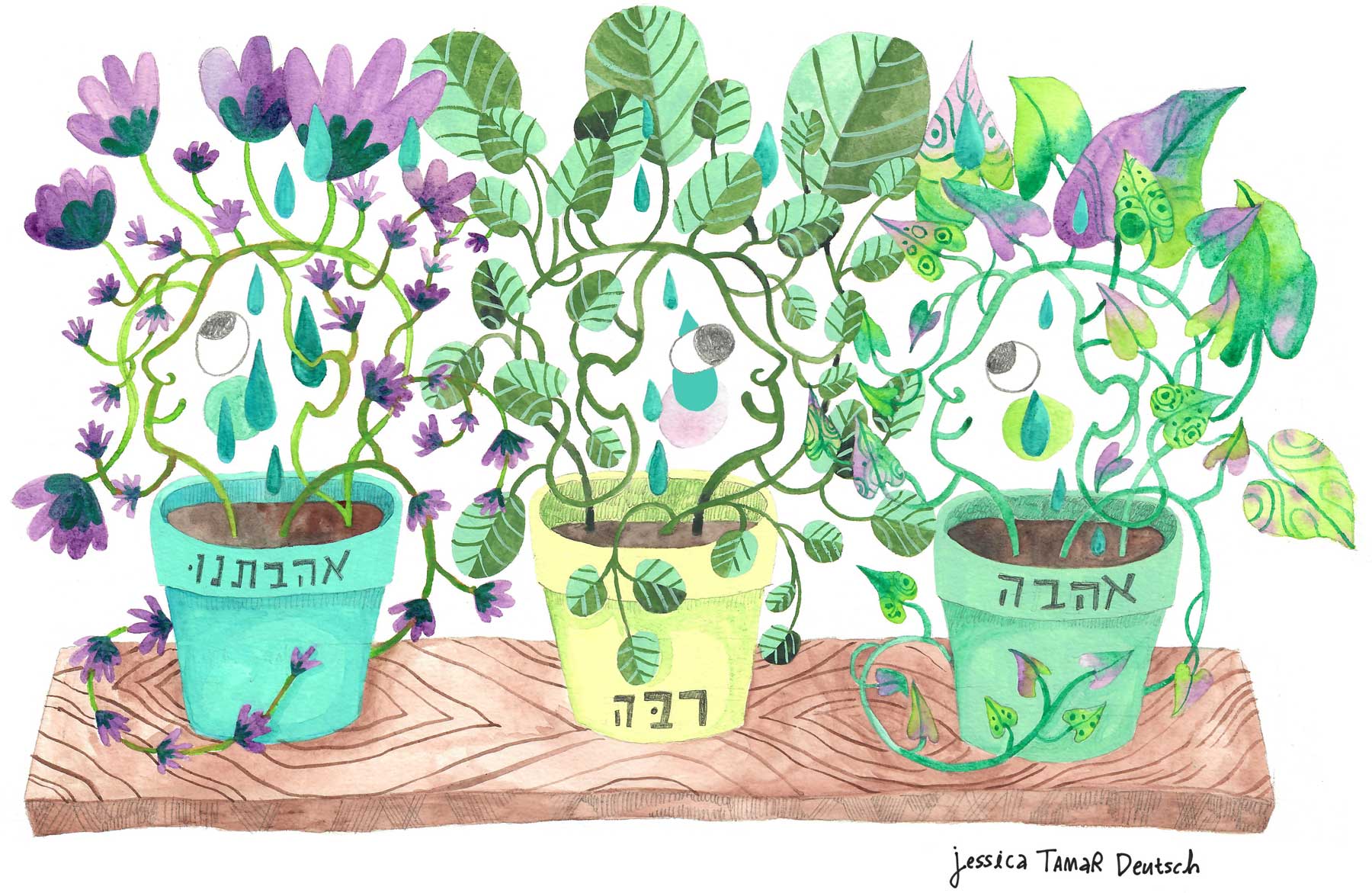
The fellowship took place over eight months and offered a highly structured, collaborative learning environment. The wellness fellows met weekly as a cohort led by Lisa Goldstein, engaged in ongoing partnership with a chavruta or thought partner, and, for some, worked closely with a personal coach. They began by articulating their worldview, later workshopped their projects in group settings, and eventually presented their work at a culminating M² colloquium. Along the way, they received support in refining their ideas, developing a written research paper, and even collaborating with a graphic designer to visually represent their work.
The M² fellows were a diverse group of Jewish educators and communal leaders from across the United States, Canada, Europe, and Israel. They represented a range of roles and settings, including day schools, seminaries, universities, youth programs, leadership development initiatives, and community organizations. Whether working in formal or informal contexts, all fellows were engaged in shaping Jewish education through the integration of Jewish wisdom, spiritual practice, and contemporary teaching strategies.
Their projects reflected this diversity. Several focused on cultivating reflective practices for students and educators, using tools like journaling, interactive learning, and pedagogies grounded in self-awareness and personal growth. Others reimagined Jewish ritual to support deeper spiritual engagement, adapting traditional practices to resonate with contemporary communities. A number of fellows created accessible educational tools that helped learners connect with Jewish texts, values, or ideas in meaningful ways. Still others addressed urgent social or communal issues, designing initiatives intended for broader use across Jewish educational and communal settings.
A Closer Look at Four Projects:
Na’anua: A Pedagogy of Jewish Transformative Movement
Dalia Davis arrived at the M² Fellowship with a clear vision: to explore the role of movement in spiritual and educational transformation. She developed Na’anua, a pedagogy of Jewish Transformative Movement, to unite body and soul in Jewish learning and spiritual expression.
Rooted in both secular and Jewish sources, her research highlights the pedagogical value of movement. For instance, Dalia cited a study showing that students who engaged in physical education earlier in the day showed improved focus and academic achievement (Ratey, 2008). Jewish texts also played a central role in her thinking. She drew inspiration from the verse “kol atzmotai tomarna, Hashem mi kamocha”. “All my bones shall say, ‘God, who is like You?’” (Psalms 35:10), which was interpreted by Midrash Tehillim to mean that every limb and sinew should be engaged in worship.
Building on the traditional Sukkot ritual of waving the Four Species, Dalia Davis reimagines the practice as a framework for spiritual alignment and embodied Jewish learning. In Jewish tradition, each of the Four Species is associated with a distinct part of the human being. Dalia assigns symbolic meaning to each as representing a different dimension of the self: aravot (willows) as mind (מחשבה), hadasim (myrtles) as soul (נשמה), etrog (citron) as heart (לב), and lulav (palm branch) as body (גוף), brought into alignment through purposeful, choreographed movement. The ritual of bringing the Four Species together and waving them in all directions thus reflects the integration of one’s full self in divine service.
The Na’anua practice unfolds in a six-step process designed to help participants align their mind, body, heart, and soul. It begins by creating a non-judgmental space for free movement and self-expression. Participants first reflect on the current state of each element of the self using a meditation worksheet. They then engage in structured swaying movements, modeled on the na’anuim of the Four Species, moving each part of the self in six ritual directions. This is followed by a period of free movement, allowing for personal expression beyond the structured motions. Participants are then invited to listen inwardly to what their bodies have expressed, and finally, they revisit their worksheets to reflect on any shifts or insights, concluding with the aforementioned verse “kol atzmotai tomarnah.”
Before joining the fellowship, Dalia had thought of wellness primarily as an emotional or spiritual state, something stable, even idealized, that one needed to achieve. Through her experiences in M², however, she began to understand wellness as a process: a set of ongoing practices that could take many forms and evolve over time.
This shift helped her reframe wellness as accessible and practical rather than niche or esoteric, no longer “just for certain types, but for everyone.” She originally designed her movement pedagogy with middle school students in mind but found that it resonated just as powerfully with adults. The fellowship’s emphasis on reflection, peer exchange, and creative iteration gave her the support she needed to expand and adapt her work. Dalia’s contribution illustrates how wellness in Jewish education can be both embodied and expansive, rooted in ritual yet flexible enough to meet the needs of diverse learners and educators.
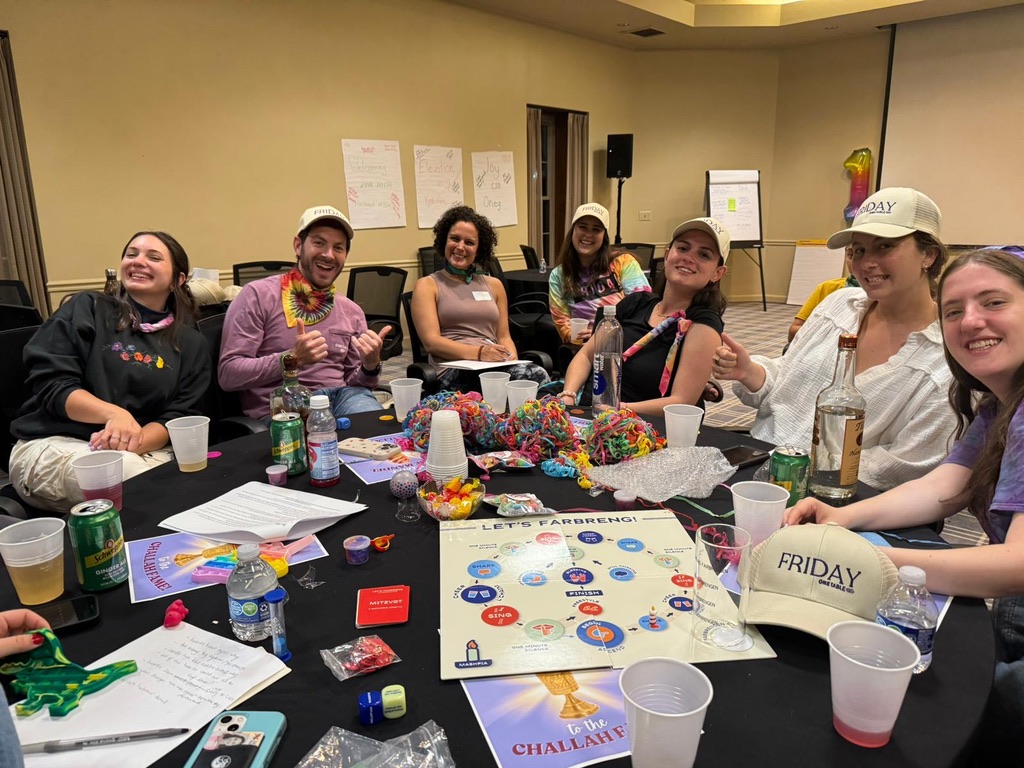
Let’s Farbreng!
For Peretz Chein, the fellowship became an opportunity to reimagine Farbrengen, a treasured Chabad tradition, as a structured, shareable practice of wellness.
“Farbrengen is emotionally powerful; it creates space for deep sharing, listening, and reflection. But outside the Chabad world, most people have no idea what it is or how to enter it.” That was his starting point. Peretz, a longtime Chabad rabbi, has directed the Chabad at Brandeis with his wife Chani since 2001, and together they founded M54: The Institute for Insourcing. He joined the M² Research Fellowship on wellbeing with a problem: how to share the power of Farbrengen, a sacred circle of storytelling, song, and spiritual vulnerability, with students who had never experienced one. “I felt a disconnect from the practice myself,” he said. “I wanted to re-engage with it, not just spiritually, but pedagogically.”
At first, Peretz set out to articulate Farbrengen as more than just a cultural tradition. “I came in wanting to articulate Farbrengen as a practice. Something that others could experience and even lead.” The fellowship’s worldview paper requirement helped him distill its essential elements, the structure, flow, themes, and emotional landscape. This prompted a critical shift: “The worldview paper helped me clarify what I was really trying to do, to create a pathway for people to taste the emotional experience of Farbrengen, without needing to be Chabad, or even particularly observant.” He realized that he needed something people could actually use: “After some feedback, I realized it couldn’t just be theoretical. …. That’s where the game idea came from.”
Peretz created a structured board game that mirrors the emotional rhythm of a Farbrengen. It includes:
- Theme cards (e.g., joy, doubt, courage) to frame the conversation
- Turn tokens to guide participation
- A timer to hold space for silence and contemplative pauses
- A circular board representing non-linear emotional flow
- Three types of dice to prompt the conversation, the l’chaim toasting, and the contemplative silence
“The game models the flow of a Farbrengen. You start with a theme card and take turns conversing on the theme. There’s even a piece for silence, because that’s part of the rhythm too,” he explained. “There’s structure, but also openness. You can’t force authenticity, but you can create the conditions for it.”
Testing the prototype yielded enthusiastic feedback: “When we tested it, people said: ‘That felt real. I didn’t think a game could feel like that.’” Today, Let’s Farbreng is publicly available for purchase with additional resources, videos, and photos shared on the M54 website. More than 300 games have already been purchased, bringing the experience of Farbrengen to communities well beyond Chabad.
Reflecting on his experience and learnings at M2, Peretz shared:
(Before the fellowship), I generally associated wellness as something external you introduce into your life to bring you to a state of being well, however you may choose to interpret being well, like going to a spa, exercising, spending time doing enjoyable activities, prioritizing your commitments, or stopping the things that cause you to be unwell. After observing people of diverse ages and backgrounds experience the Farbrengen with Let’s Farbreng, I discovered that wellness can emerge from within oneself when the right systems and structures support it, elements like companionship, authentic conversations, singing, toasting, and contemplative silence that form the essence of a Farbrengen. This realization has fundamentally shifted how I approach wellbeing. Rather than constantly seeking external solutions or activities to fix what feels broken, I now understand that we each carry an innate capacity for wellness that simply needs the right conditions to flourish.
L’Hitatef: Ritual as Container
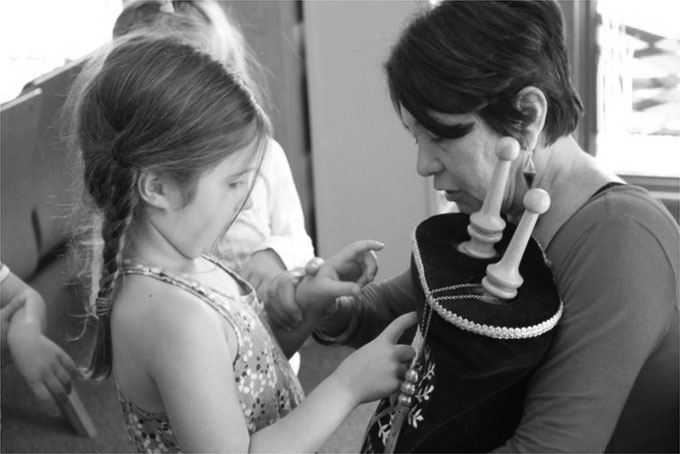
When Dr. Andrea Lieber joined the fellowship, she planned to expand a practice she had developed during the pandemic: a meditative drawing ritual inspired by the Zentangle method, which she’d been using with teenagers at Camp Ramah. At that time, Andrea was thinking about the effects of COVID on body image and mental health. The practice she had planned to translate for a Jewish space was calm, creative, and cathartic. But the fellowship asked for something different: a pedagogy grounded in Jewish text or ritual. After studying the mishnah about 48 ways Torah is acquired with the M2 fellowship group, she was struck by one pathway in particular: “Ahuv” or feeling loved. This led Andrea to consider the emotional safety required as a prerequisite to Torah study. So she pivoted. She “started thinking about what it means to create a container, not just for prayer, but for learning.” Her new idea: L’hitatef, the ritual act of wrapping in a tallit. Learners enshroud themselves in a tallit or a towel, or even just their own arms, recite the traditional blessing, and enter the learning space with intention and feeling held. The practice Andrea developed is now used as the start of middle school classes, camp programs, staff meetings, and adult learning sessions. It frames learning not as a task, but a sacred act of becoming. “Jewish ritual,” Lieber said, “has so many doorways into wellness. We just have to remember to walk through them.”
Cultivating Joy as a Practice
For Jessie, a Jewish educational leader based in the U.S., joy is not understood as a fleeting feeling but as a sustained, deliberate practice. Her project, The Pedagogy of Cultivating Joy, was designed to offer educators tools and structures for experiencing joy as a daily discipline. Through a year-long journey of self-reflection, chavruta partnerships, and creative modalities, participants explore how joy can be nurtured intentionally and shared communally. The program is built on voluntary participation, ensuring authentic engagement and deep commitment. As educators develop personal joy practices, they also cultivate a shared language of joy with their peers, creating a vibrant and supportive culture of wellness.
While the project was originally conceived for school-based implementation, Jessie has expanded and adapted it for other meaningful contexts, including with a learning group and even with her own daughter. These experiences affirmed the framework’s flexibility and relational depth. Participants select one of seven strategies each month to cultivate joy, supported by the accountability and reflection of a chavruta partner.
Jessie continues to explore how the pedagogy might evolve in new educational settings, adapting the model to meet the needs of diverse communities and organizational cultures. Her current leadership role provides new opportunities to consider how joy might be cultivated across both personal and professional domains. For Jessie, the M² fellowship helped sharpen her vision of wellness, not as episodic self-care but as the cultivation of sustainable practices rooted in intentionality, community, and joy. She came to see joy as a skill that can be developed and sustained, rather than a temporary emotional state. The fellowship also reinforced the idea that “wellness is not just individual but profoundly communal.”
This insight took on deeper meaning following the October 7 attacks in Israel, when the fellowship cohort became a source of connection and support. “The way we supported each other during difficult moments and celebrated moments of learning and growth,” she reflected, “reinforced that true wellness thrives in connection, shared wisdom, and a commitment to both personal and collective flourishing.” By integrating these insights into The Pedagogy of Cultivating Joy, Jessie offers educators a pathway to emotional resilience, relational strength, and communal well-being anchored in Jewish values and daily practice.
Toward a Jewish Vision of Wellness
Lisa Goldstein suggests that the Hebrew concept of a “good life,” as expressed in Birkat HaChodesh, may offer a more rooted Jewish language for wellness, a life of peace, joy, resilience, learning, dignity, and divine connection. “This blessing names it all,” she says. “It doesn’t reduce wellness to a feeling. It links it to values, to community, to the divine.”
The M² Fellowship became a kind of collective Birkat HaChodesh, a vision of what Jewish education could be when wellness is part of the curriculum, not just for students but for educators as well. Fellows were given the time, tools, and trust to turn abstract ideas into living practices. These practices took root in classrooms, communities, and personal lives.
But just as important as the tools were the frameworks the fellows developed for understanding wellness itself. Across their projects, fellows moved away from viewing wellness as a fixed state to be attained and toward understanding it as a dynamic, ongoing process. They framed wellness not as individual self-care but as collective flourishing, not as an escape from difficulty but as a set of practices that help us show up more fully for ourselves, for our students, and for each other.
For other Jewish educators and organizations, the fellowship offers both a challenge and an invitation:
- Make space for wellness as part of the educational mission. Not as an add-on, but integrated into teaching, learning, and leadership.
- Draw from Jewish tradition as a primary source, looking for rituals, texts, and values that can be adapted or re-imagined to support emotional, spiritual, and communal well-being.
- Invest in relationships and reflective practice. The cohort model, chavruta partnerships, and peer feedback all proved essential to sustaining wellness over time.
- See wellness as communal, creating conditions in which everyone in the learning environment can feel supported, connected, and able to flourish.
As Goldstein noted, “Jewish tradition already holds language for wellness. We just have to remember it.” Perhaps that is what this fellowship offered: not only new tools, but an ancient blessing rediscovered, one that calls educators to teach with their souls intact and to help others do the same.
References:
- Brooker, A., McKague, M., & Phillips, L. (2019). Implementing a whole-of-curriculum approach to student wellbeing. Student Success, 10(3), 55-63.
- Fox, K. E., Johnson, S. T., Berkman, L. F., Sianoja, M., Soh, Y., Kubzansky, L. D., & Kelly, E. L. (2022). Organisational-and group-level workplace interventions and their effect on multiple domains of worker well-being: A systematic review. Work & Stress, 36(1), 30-59.
- Johnston, K. A., & Lane, A. B. (2023). Metaphors of university educators: The expectation gap with implications for educator wellbeing. Student Success, 14(3), 1-17.
- O’hara, D. (2017). The intrinsic motivation of Richard Ryan and Edward Deci. American Psychological Association.
- Wilson, N., Smith, L., Taylor, R., & Kohler, F. (2024). Examining the experience of healthcare workers who led staff wellness rounding during the COVID-19 pandemic. Australian Health Review, 49(1).
- Yager, Z. (2011). Health education in teacher education: Evaluation of learning design with embedded personal wellness learning and assessment focus. Australian Journal of Teacher Education (Online), 36(10), 108-125.
Dr. Esther S. Friedman is the Founder and Lead Consultant of OMEC Consulting, where she uses research-driven inquiry to support professional development and educational innovation in schools, community organizations, and foundations. She recently completed a research fellowship with CASJE, where she led a national study on student voice in congregational learning, and she earned her PhD at the Seymour Fox School of Education at the Hebrew University of Jerusalem, examining how Orthodox Bible teachers navigate ideological tensions in non-Orthodox school settings. Esther has received multiple distinctions, including the Harold Wechsler Award for Emerging Scholars, the Sylvia and Moshe Ettenberg Research Grant, and the Journal of Jewish Education’s Article of the Year Award.

Latest Volumes
Past Volumes










Built On the Roots of Tradition: New Models in Jewish Supplementary Education